Why KPIs Are the Backbone of Contractor Marketing
Let’s cut to the chase: if you’re not tracking your numbers, you’re flying blind. In the home services world, hope isn’t a strategy.
Data is.
Key Performance Indicators (KPIs) are the backbone of every successful contractor’s marketing engine. They tell you what’s working, what’s wasting your money, and where to double down for growth.
If you want to stop guessing and start scaling, it’s time to get serious about your KPIs.

Branding: The Silent Multiplier Behind Every KPI
Before you even think about leads and close rates, let’s talk branding. Your brand is working for you (or against you) every single day, whether you’re running Facebook ads, knocking on doors, or just driving your truck through the neighborhood. First impressions happen in a split second. That means your logo, your truck wrap, your uniforms, and your online presence are doing a lot of heavy lifting before you ever get a call.
Here’s the kicker: 81% of consumers say they need to trust a brand before they’ll buy. Companies with consistent branding can grow revenue by 10 to 20%. If your branding looks like it was slapped together in Microsoft Paint, you’re leaving money on the table. A strong, consistent brand builds trust, boosts your click-through rates, and makes every marketing dollar work harder.
Don’t skimp on this. Branding is the silent multiplier behind every KPI you track.
- Cost Per Lead (CPL): How much you pay for each inquiry – phone call, form fill, or message. Lower is better, but not at the expense of quality.
- Cost Per Appointment Set: The cost to get a lead onto your calendar. This shows how efficient your team is at turning interest into action.
- Cost Per Appointment Run: What it costs to actually run the appointment (after cancellations and no-shows are factored in).
- Cost Per Sale: Total marketing cost divided by the number of jobs you close. This is your real cost to win business.
- Revenue Per Sale: The average value of each job you sell. Bigger isn’t always better if your costs are out of control, but you need to know this number.
- Return on Ad Spend (ROAS): Revenue divided by ad spend. A 10x ROAS means you’re making $10 for every $1 spent. That’s the gold standard.
- Marketing Percentage: Marketing spend divided by revenue. 10% is a healthy target for most contractors aiming for growth.
- Return on Investment (ROI): The actual profit your marketing brings back to the company. This is the bottom line.
If you offer recurring services, add Lifetime Customer Value to the list. It’s the total revenue you can expect from a customer over the life of your relationship. For businesses like landscaping or plumbing, this number can be a game-changer.
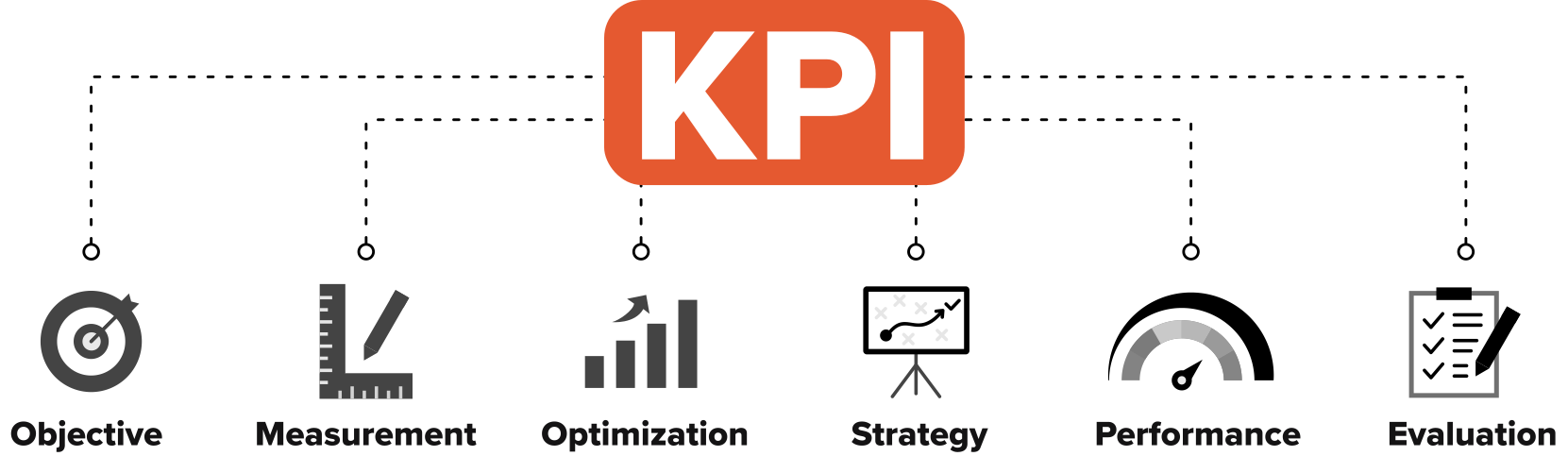
The 8 Essential Marketing KPIs Every Contractor Should Track
Let’s get into the numbers that matter. These are the KPIs that separate the pros from the amateurs:

Real-World KPI Benchmarks: What Healthy Numbers Look Like
Let’s put some real numbers to these KPIs. For a foundation repair contractor, here’s what healthy benchmarks look like:
- Cost Per Lead: $250
- Appointment Set Rate: 90%
- Appointment Run Rate: 95%
- Close Rate: 30%
- Average Revenue Per Sale: $10,000
- Marketing Percentage: 10%
- ROAS: 10x
Here’s how it all connects:
If your monthly revenue goal is $300,000 and your average job is $10,000, you need 30 sales. With a 30% close rate, you’ll need to run about 100 appointments. At a 95% run rate, that means setting 105 appointments. With a 90% set rate, you’ll need 117 leads. Multiply that by your $250 CPL, and your ad budget should be around $29,250 for the month.
These aren’t just numbers: they’re your roadmap. If you’re not hitting these benchmarks, you know exactly where to look for leaks in your marketing engine.

The Power of Working Backwards: Setting Goals & Building Your KPI Engine
Most contractors start with a marketing budget and hope it brings in enough business. That’s backwards. Start with your sales goal and work your way back using your actual performance metrics. Here’s how:
- Set your monthly revenue goal.
- Divide by your average revenue per sale to get the number of sales needed.
- Divide by your close rate to find out how many appointments you need to run.
- Divide by your appointment run rate to get the number of appointments you need to set.
- Divide by your set rate to determine how many leads you need.
- Multiply leads needed by your CPL to set your ad budget.
This approach takes the guesswork out of marketing. You’ll know exactly how many leads, appointments, and sales you need to hit your goals – and how much to invest to get there.
Lead Sources, Math & the Real Cost of Growth
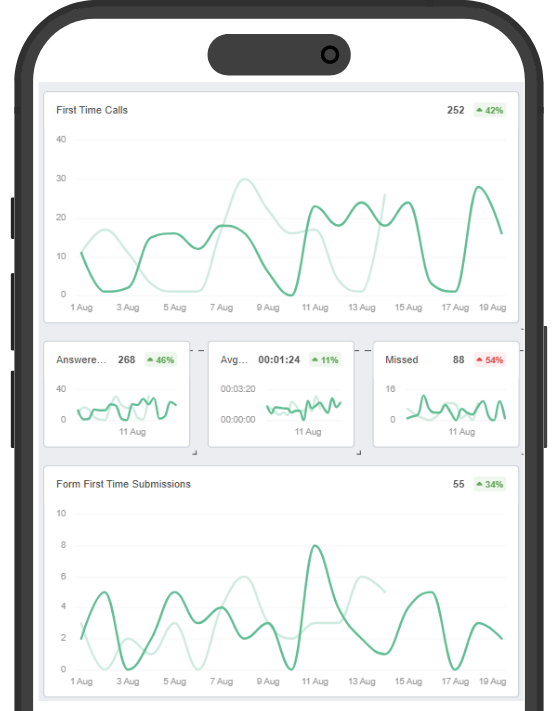
Not all leads are created equal. Self-generated leads (from your own marketing) usually cost more up front but convert better and have higher average tickets. Aggregator leads (like Angie’s List) might be cheaper, but they often close at lower rates and bring in smaller jobs. Social platforms like Meta can deliver lots of leads at a low cost, but you’ll need to work harder to get them on your schedule.
Track your KPIs by lead source. Don’t chase “cheap” leads if they don’t convert or bring in low-value jobs. Diversify your sources, measure everything, and adjust your strategy based on real data, not gut feelings.
Measure, Adjust & Grow With Confidence
If you want to grow your contracting business, you need to measure what matters. KPIs aren’t just numbers. They’re your accountability system, your early warning signals, and your growth engine. Build your KPI engine backwards from your goals, track your numbers religiously, and share them with your team. When you know your numbers, you make decisions like a CEO, not just a contractor.
That’s how you get the edge. And keep it.
Learn more about how contractors can use AI to book more jobs on The Contractors’ Edge podcast: Episode 3.