
Foundation Repair Engineering: Why the Right Engineer Protects Your Profit, Production, and Reputation
Author: Mike Stiers
Author: Mike Stiers
Most foundation repair contractors know what an engineering report costs, but I don’t think enough owners calculate what slow engineering, bad engineering, or incomplete engineering can cost the rest of the business. The cost is not just the invoice from the engineer. It is the job that sits for two weeks while the homeowner loses urgency, the permit that gets kicked back because something was missed, or the production crew that has to return to a house because the repair addressed the visible damage without correcting what caused it. It is the salesperson, production manager, office staff, truck, fuel, labor, materials, and lost production capacity tied up in a callback that should never have happened.
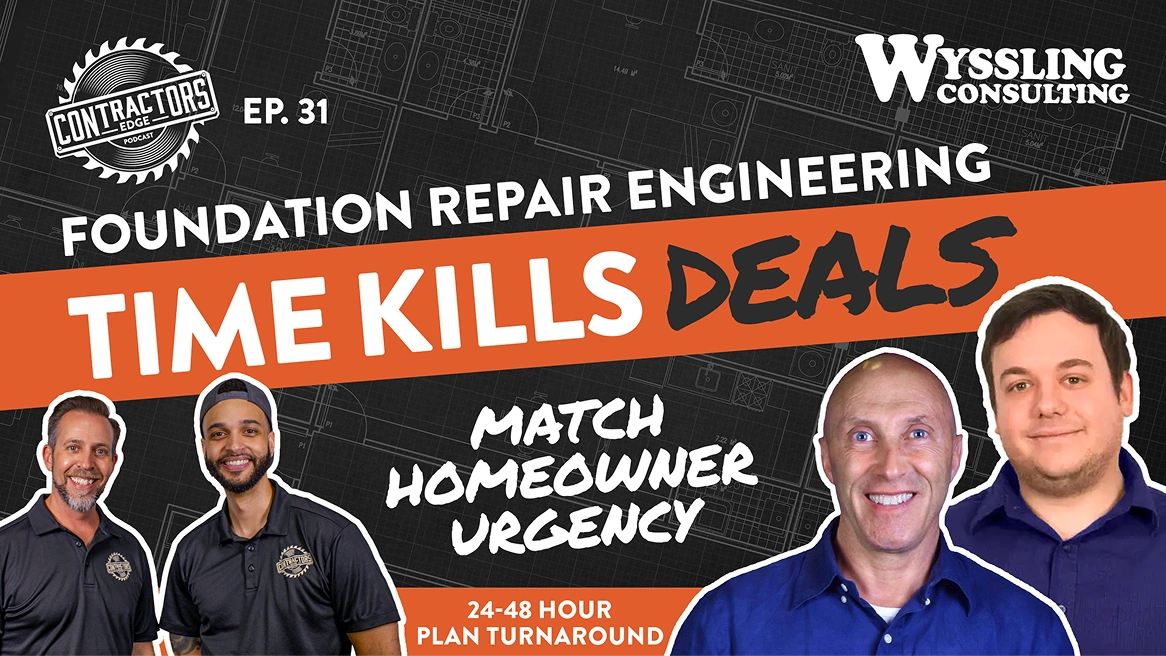
That is why I think contractors need to stop viewing engineering as a required expense and start looking at it as part of the operating system of the business. On a recent episode of The Contractor’s Edge, Anthony Brown and I sat down with Scott Wyssling and Heath Harpster of Wyssling Consulting to talk specifically about engineering from the contractor’s side of the desk. Scott has more than 30 years of engineering experience, and Heath leads Wyssling’s structural engineering team. The conversation covered turnaround time, permitting, root cause analysis, callbacks, industry standards, and what contractors should actually expect from an engineering firm. My biggest takeaway was simple: you are not shopping for a stamp. You are choosing a partner that can either create friction in your business or remove it.

The Real Business Cost of Slow Foundation Repair Engineering
I spent years inside The Basement Doctor before starting Greenbaum Stiers, and engineering was a normal part of the process. Looking back, what surprises me now is how much turnaround time we accepted as normal. Waiting a couple of weeks for an engineering report did not feel unusual at the time, but when you really think about what happens during those two weeks, you realize how expensive that delay can become.
I spent years inside The Basement Doctor before starting Greenbaum Stiers, and engineering was a normal part of the process. Looking back, what surprises me now is how much turnaround time we accepted as normal. Waiting a couple of weeks for an engineering report did not feel unusual at the time, but when you really think about what happens during those two weeks, you realize how expensive that delay can become.
A homeowner calls because they have an urgent problem. Maybe a basement wall is bowing, the floor is settling, or they are seeing cracks they have never noticed before. Whatever brought them to you was important enough for them to call, schedule an inspection, let a salesperson into the house, listen to the diagnosis, review the proposed repair, and in many cases commit to spending thousands or tens of thousands of dollars. You have momentum. Then you tell them you are waiting on engineering.
A few days go by, then a week, then another week. That homeowner now has time to reconsider the purchase, call another contractor, postpone the project, question whether the problem was really as urgent as it felt on the day of the inspection, or simply get frustrated with how long everything is taking. Anyone who has spent time in sales knows the phrase time kills deals, and foundation repair is not exempt from that rule just because the delay happened after the salesperson left the kitchen table.
Wyssling told us that once it has the information needed to review the project, its target is generally a 24 to 48 hour turnaround for foundation repair engineering plans. That number caught my attention because the difference between two days and two weeks is not simply an engineering difference. It affects the customer experience, production scheduling, permit timing, cancellation risk, cash flow, and how quickly a company can turn sold work into completed revenue. Engineering turnaround should be treated as an operational KPI.
If you are running a foundation repair company and routinely waiting one, two, or three weeks for plans, I would start measuring it. Calculate the average engineering turnaround time, then look at cancellations, project delays, permit resubmissions, and jobs sitting in backlog waiting for technical approval. You may find a revenue leak hiding in a place nobody has been measuring.

Fast Engineering Requires a Better Contractor Handoff
There is another side to this conversation, and contractors need to own it. You cannot demand a 24 hour engineering turnaround while sending your engineer three blurry photos, incomplete measurements, and a description that basically says, “Wall looks bad. Please advise.” Speed requires good information.
Heath explained that their team typically wants clear photographs of the condition, photographs that provide enough context around the problem, accurate project information, and a plan showing the contractor’s proposed repair. Many foundation repair companies now use tools such as ArcSite to document the property and proposed solution before sending the project for engineering review. That matters because most experienced foundation repair contractors already have a strong idea of how they want to solve the problem. The engineer does not need to reinvent the company’s entire installation process on every project. The contractor proposes the solution, and the engineer reviews the conditions, calculations, structural requirements, code considerations, and technical details to determine whether the proposed solution makes sense or needs to change.
Wyssling has also built its own internal CRM that allows contractors to create projects, upload plans and photographs, communicate with the assigned engineer, and keep the project moving without relying entirely on email. I love that approach because email can become a black hole. Send eight large photos, a PDF, two drawings, and an explanation to somebody whose inbox already has 200 messages in it, and suddenly your “urgent project” looks exactly like everyone else’s urgent project.
The broader lesson is not that every engineering company needs to build proprietary software. The lesson is that your handoff process should be a system. A foundation repair contractor who expects fast engineering should have a standard checklist for what gets submitted every time, including clear photographs, accurate measurements, a site plan or project drawing, the contractor’s proposed repair method, product information when relevant, and any known drainage, structural, or site conditions that could affect the repair. Good information going in usually means faster and better information coming out.
Good Engineering Finds the Root Cause, Not Just the Damage
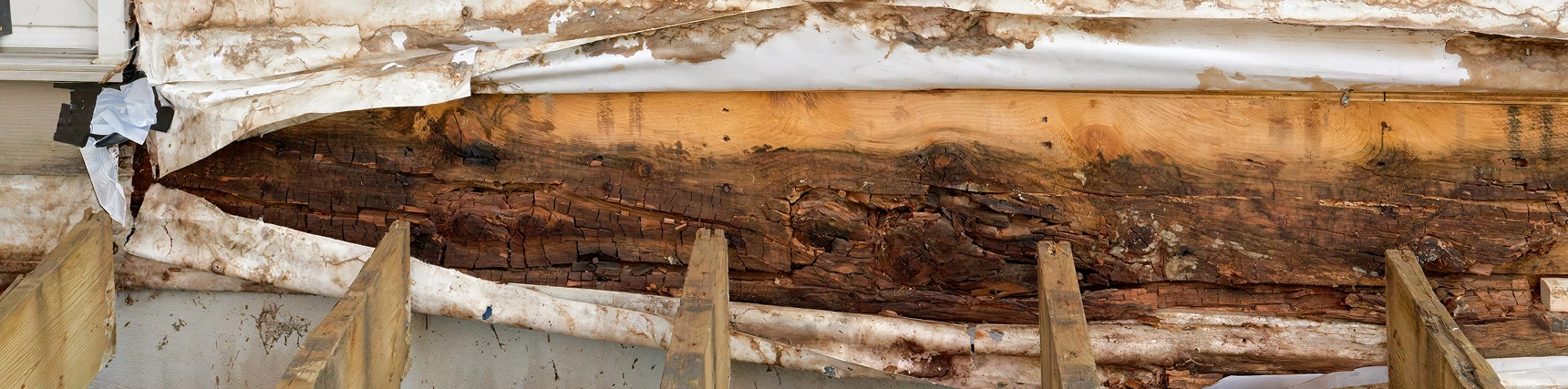
The strongest example from our conversation involved a rotting rim board. A contractor had been brought into a home to replace the damaged rim board, and at first glance the project seemed straightforward. Support the floor system, remove the deteriorated material, replace it, and get the engineer to approve the method.
Except Scott asked a different question: Why did the rim board rot?
That question changed the project. The original photos mostly showed the problem from inside the house, so when the team investigated what was happening outside, they discovered conditions that explained the damage. Soil had been built up around the house, a patio was sitting at grade and pitching water back toward the structure, and roof drainage was contributing additional water to the area. Moisture was repeatedly reaching a part of the structure that should not have been exposed that way.
The rotting rim board was the symptom. The water management problem was the cause. The contractor could have installed a beautiful new rim board and still failed the homeowner because the repair would have addressed what everyone could see without correcting what caused it. It might have looked perfect when the crew left, but a couple of years later the same conditions could have damaged the replacement.
This is where good engineering becomes far more valuable than a signature at the bottom of a drawing. A strong engineer should be willing to ask, “Why is this happening?” That question is incredibly important in foundation repair, basement waterproofing, crawl space repair, structural repair, drainage, concrete, and plenty of other trades. Homeowners see the crack, the bow, the settlement, the moisture, or the rotten material. Contractors have to look beyond the symptom and understand the system that produced it. If you only repair what you can see, you can accidentally build tomorrow’s warranty claim into today’s installation.
What Does a Foundation Repair Callback Really Cost?
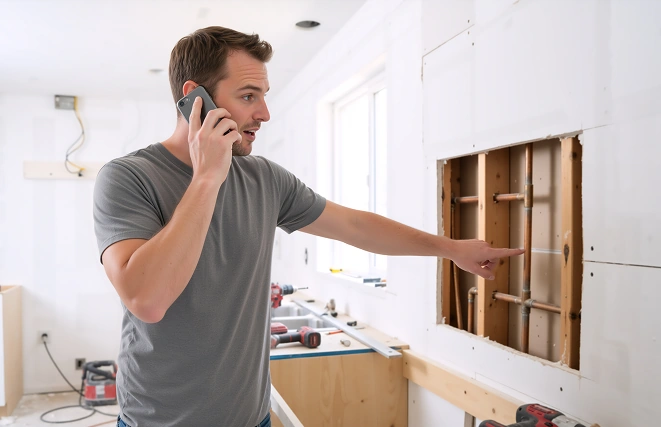
Callbacks are another area where I think a lot of contractors dramatically underestimate the financial damage. We recently had this exact discussion with another contractor. They knew they had too many go backs, but when we started talking through the actual economics, it became obvious that the cost was much larger than the material or repair time.
Imagine you have a project two hours away and need to send a three person crew back to the house. Before anyone touches the repair, you have four hours of round trip windshield time multiplied by three employees. That is 12 paid labor hours before the callback work even begins. Now add the repair time itself, fuel, truck expense, materials, scheduling, management involvement, customer service time, and any additional inspection or documentation.
Then add the cost most companies miss: that crew was supposed to be producing revenue somewhere else. If you pulled them off another project to handle warranty work, the callback did not simply create an expense. It consumed production capacity that could have been completing sold work. That becomes even more expensive as a contractor grows, especially if the business covers a large service area, sends crews several hours away, or occasionally has to put teams in hotels for larger projects.
Now compare that with spending several hundred dollars to have another qualified set of eyes review the project before installation. Suddenly, engineering does not look very expensive. The cheap option can become awfully expensive when you have to do it twice.

Engineering Can Add Value Even When It Is Not Required
Heath made another point contractors should consider. Some companies only involve an engineer when a building department requires engineering. That is understandable, but it asks the wrong question. The question should not always be, “Do I have to get an engineer?” Sometimes the better question is, “Would having an engineer review this reduce our risk?”
Those are not the same thing. An experienced engineer may identify footing requirements, column attachment details, wall reinforcement spacing, structural concerns, code issues, or other conditions that an installer or salesperson could easily overlook. Sometimes the value is simply having another qualified set of eyes look at the repair before production begins.
That becomes even more important as a company scales. When you have a small team and the owner has been in the industry for 25 years, a lot of knowledge lives inside a handful of people. The owner has seen almost everything. The production manager knows the weird situations. The lead installer has learned a thousand lessons the hard way. Then the company grows, and you add salespeople, installers, crews, service areas, and perhaps additional branches or states.
The amount of experience inside the company may be growing overall, but it is no longer concentrated in every person touching every project. That is where systems, training, manufacturer specifications, quality control, and outside engineering expertise become increasingly important. You are not just paying an engineer for a drawing. You are paying for accumulated experience and technical judgment that can help your team avoid learning every lesson through a callback.
What Should Contractors Look for in a Foundation Repair Engineering Firm?
One of the questions we asked Scott and Heath was how a contractor should evaluate an engineering firm, and their answers sounded remarkably similar to how I would tell a contractor to evaluate a marketing agency. You need to look beyond price.
How long has the firm been in business?
How many engineers are on the team?
Where are they licensed?
What is their experience with foundation repair and structural work?
What is their normal turnaround time?
Who are some of the contractors they currently support?
Can they provide references?
Can they show examples of similar work?
Those questions matter, but I would add another one near the top of the list: Can you actually communicate with them? A good engineering partner should not disappear after receiving your files. Your team should know how to reach somebody when a legitimate question comes up. That does not mean an engineer needs to answer every phone call in 30 seconds, but a contractor running active jobs should have a reliable communication path.
During our interview, Wyssling described giving clients direct communication with the people working on their projects and, in some circumstances, even getting on a phone or FaceTime call from the jobsite to understand what the contractor is seeing. That is a partnership. If your engineer’s only contribution is receiving a drawing, stamping it, sending an invoice, and disappearing, I would at least ask whether you are getting everything an engineering relationship could provide.

One of the Biggest Engineering Red Flags: Nobody Ever Asks Questions
This might have been my favorite answer of the entire episode. We asked Heath what red flags contractors should watch for when evaluating an engineering firm, and his answer was essentially this: if they never ask questions, that should concern you.
I agree completely. If every plan you submit gets approved without the engineer ever asking for another photograph, questioning a condition, requesting a measurement, challenging an assumption, or discussing the proposed repair, what exactly are they reviewing? A rubber stamp might feel convenient right up until the repair fails.
Good partners create healthy friction when it is necessary. Your engineer should occasionally make your team explain why they chose a particular repair. They should ask for more information when the photographs do not tell the complete story, and they should be willing to tell you when something does not look right. That might delay one project by a day, but it could save you from going back to the project for free two years later.
Not All Engineering Experience Is the Same
Contractors should also understand the qualifications of the person reviewing the work. Engineering covers multiple disciplines, and structural, civil, electrical, geotechnical, and other types of engineering require different experience. A professional license by itself does not automatically mean someone has deep experience with every type of project.
Heath discussed situations they have seen in other industries where engineers were approving work outside the area where they had meaningful structural expertise. That should get a contractor’s attention. If you are trusting someone to help protect a structural repair that your company will warranty and put its name behind, ask who is actually reviewing the project and what their experience is with that type of work.
Homeowners are not going to remember the engineering firm if something fails.
They are going to remember the contractor whose truck was in the driveway.
They are going to remember the contractor whose truck was in the driveway.

Foundation Repair Is Growing, and Standards Matter
Our conversation eventually moved into something bigger than any single project. The foundation repair industry is growing rapidly. We see it through our work with contractors. We see it at the National Foundation Repair Association. We see it through the Basement Health Association, manufacturers, distributors, new technology, and the increasing amount of investment entering the space.
Growth is exciting, but it also brings scrutiny. Scott and I discussed the danger of waiting until people outside an industry decide the industry needs standards written for it. If contractors, engineers, manufacturers, suppliers, and industry associations can work together to establish strong installation practices, education, and reasonable standards, we have an opportunity to improve the industry ourselves. If we do not, eventually somebody else may decide how things should be done.
That is why participation in organizations such as the NFRA and BHA matters. It is also why manufacturer education matters. Your sales inspectors need to understand what they are diagnosing. Your production teams need to understand the installation requirements of the products they are using. Your leadership team needs to understand where engineering belongs in the process. The stronger and more professional this industry becomes, the harder it is for poor workmanship and cheap shortcuts to compete, and that benefits good contractors and homeowners alike.

Stop Shopping for an Engineering Stamp Of Approval
If you own a foundation repair company, here is what I would take away from this conversation: stop shopping for a stamp and start evaluating the engineering relationship based on what it does for the entire business.
Does your engineer help you move projects faster? Do they communicate with your team? Do they understand foundation repair? Do they understand the products and systems you install? Do they ask questions? Do they catch conditions your team may have missed? Do they help you understand root causes? Do their plans make permitting easier? Can your team provide the information they need consistently? Are they helping you reduce callbacks and protect your warranty exposure?
That is the real scorecard. The cheapest report is not inexpensive if it slows down a $20,000 project for two weeks. The fastest stamp is not valuable if nobody actually reviewed the repair, and skipping engineering is not saving money if a crew has to drive four hours round trip six months later to fix something that should have been caught before installation.
The right engineering partner should make the contractor better. That is the standard.
If I owned a foundation repair company today, I would start with three things.
Three Things I Would Do This Week
01
First, calculate your actual engineering turnaround time. Look at the last 20 or 30 engineered projects and measure the number of days between submitting complete information and receiving the plan. If the number is consistently high, determine whether the bottleneck is your engineering partner or your own handoff process.
02
Second, standardize the information your team submits. Create one required engineering package with photographs, measurements, plans, repair recommendations, product information, and relevant site conditions. Do not let every salesperson or production manager invent their own process.
03
Third, review the last year of callbacks and warranty work. Do not stop at material cost. Calculate labor, windshield time, management time, fuel, truck expense, lost production capacity, and any discounts or concessions made to keep the homeowner happy. Then ask how many of those issues could have been prevented through better diagnosis, documentation, training, quality control, or engineering.
You might discover that improving engineering is not another expense. It is one of the easier ways to protect the margin you are already earning.
Frequently Asked Questions About Foundation Repair Engineering
When should a foundation repair contractor involve an engineer?
An engineer should be involved whenever engineering is required by the jurisdiction, but contractors should also consider engineering when structural conditions, unusual site conditions, repair complexity, code questions, or warranty risk justify an additional technical review. Waiting until after installation can create unnecessary rework and make it much harder to correct a flawed repair approach.
What information helps a structural engineer complete foundation repair plans faster?
Clear photographs, accurate measurements, a detailed site or repair plan, the proposed repair method, relevant product information, and context about surrounding conditions give the engineer a much stronger starting point. A consistent contractor handoff process can dramatically reduce unnecessary back and forth.
How long should foundation repair engineering take?
Turnaround varies by project and engineering firm. In our conversation, Wyssling Consulting said its typical target is 24 to 48 hours once it receives the complete information required to perform the review. Contractors should measure their own actual turnaround time because long delays can affect production scheduling, homeowner confidence, cancellations, and revenue collection.
What are red flags when choosing a foundation repair engineer?
Poor communication, long unexplained turnaround times, lack of experience with structural or foundation repair work, inability to provide references or examples, and an engineer who never asks questions should all get your attention. A good engineer is reviewing the problem, not simply processing paperwork.
Is engineering worth paying for when the building department does not require it?
It can be. Engineering can provide value beyond permitting. An experienced engineer may identify structural concerns, installation details, root causes, or potential failure points that reduce callbacks and warranty exposure. The decision should be based on project risk and value, not simply whether a stamp is legally required.

The Bottom Line
Foundation repair contractors spend a lot of time thinking about lead cost, close rate, labor efficiency, material cost, gross margin, and production capacity. Engineering belongs in that same conversation because it can affect every one of them. A strong engineering relationship helps preserve sales momentum, moves projects toward production faster, improves the quality of the repair, gives your team another experienced set of eyes, and reduces the chances that today’s installation becomes tomorrow’s warranty call.
That is a much bigger value than a stamp of approval.
If you want to hear the complete conversation, watch or listen to The Contractor’s Edge, Episode 31: “Time Kills Deals: 24–48 Hour Foundation Repair Plans with Wyssling Consulting,” featuring Scott Wyssling and Heath Harpster.
And if you know another foundation repair contractor who needs to hear it, send it to them. The stronger we make the contractors, manufacturers, engineers, and organizations inside this industry, the stronger the entire industry becomes.
Keep building the business and sharpening your edge.